
Tile Flooring Showdown: Porcelain vs Ceramic Tile Flooring
Which is better for your home or office: porcelain or ceramic tile flooring? Both have their pros and cons, but one may be a better choice for you.
In this article, we’ll compare porcelain and ceramic tile flooring so that you can make an informed decision. We’ll tell you the differences in a variety of categories, such as:
- Composition
- Appearance
- Water and Heat Resistance
- Care, Cleaning, and Maintenance
- Durability
- Lifespan
- Cost
We’ll also give you a recap with the pros and cons of each! Let’s get started.
Porcelain vs Ceramic Tile Flooring
It’s a tough decision when you’re figuring out what flooring is best for your home or office space. Do you want the classic look of ceramic tile? Or the more modern porcelain tile?
Both have their own individual benefits and drawbacks that you should take into consideration before making your final decision.
Porcelain vs Ceramic Tile : Composition
Ceramic tiles have been around for centuries, porcelain tiles are a more modern invention.
Ceramic tiles are made of natural clay that is kiln-fired. The composition and firing process gives these tiles their porosity. The feel is typically rougher than porcelain tiles.
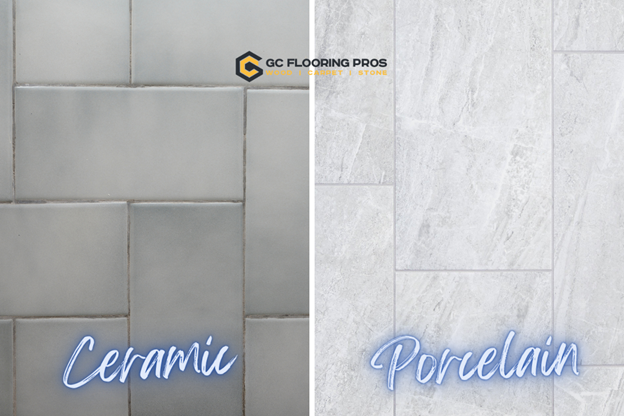
Porcelain tiles are made of finer, denser clay that is also kiln-fired but at a higher temperature. The porosity of porcelain tiles is lower than that of ceramic tiles. The feel of porcelain tiles is typically smoother.
The difference in composition also makes porcelain tiles more durable and less prone to chipping and cracking than ceramic tiles, which we’ll elaborate on later.
Porcelain vs Ceramic Tile : Appearance
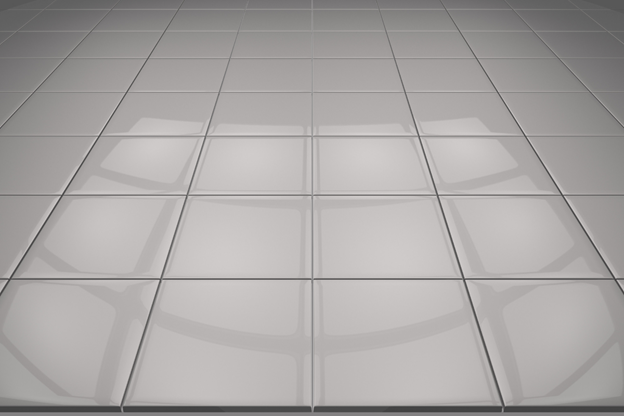
Porcelain and ceramic tiles come in a wide variety of colors, styles, shapes, and sizes. You can find them in both glazed and unglazed varieties.
Glazed porcelain tiles have a smooth, shiny surface that is easy to clean. Unglazed porcelain tiles are more natural-looking with a matte finish. They are also more slip-resistant than glazed porcelain.
Ceramic tiles come in both glazed and unglazed varieties as well. The glazed ceramic tiles have a smooth, shiny surface like porcelain tiles, while unglazed ceramic tiles have a more natural, matte finish.
Colors for ceramic tiles tend to be more muted than porcelain tiles. However, you can find both porcelain and ceramic tiles in a wide variety to suit your tastes.
Porcelain vs Ceramic Tile: Water and Heat Resistance
Porcelain tile is denser than ceramic tile, making it more water-resistant. It can be used in areas where there is a lot of moisture, such as bathrooms and kitchens.
Ceramic tile is less dense than porcelain tile, making it less water-resistant, but still has good resistance.
Porcelain tile is also more heat resistant than ceramic tile. It can be used in areas where there is a lot of heat, such as fireplaces and outdoor patios, while ceramic tile is less heat resistant and hot areas should be avoided.
If you’re going to use either tile in a wet area, it’s important to make sure that the tile is properly sealed to prevent water damage.
Porcelain vs Ceramic Tile: Care, Cleaning, and Maintenance
Porcelain and ceramic tiles are easy to care for. They can be vacuumed, swept, or damp mopped. When cleaning porcelain or ceramic tile floors, use a mild detergent and avoid harsh chemicals.
Porcelain and ceramic tiles are also stain-resistant. However, they can be scratched by dirt, sand, or grit that is tracked on your shoes. To avoid scratching the surface of your porcelain or ceramic tile floor, use doormats at all entrances and area rugs in high-traffic areas.
Sealing your tiles will also help to protect them from stains and scratches. To do this, simply apply a sealer to the surface of the tile with a sponge or brush and allow it to dry. You can also get it professionally sealed for better peace of mind.
Overall, the maintenance of porcelain and ceramic tile floors is minimal. These types of floors are built to last!
Porcelain vs Ceramic Tile: Durability
Porcelain tile is more durable than ceramic tile. It is less likely to chip, scratch, or crack.
Porcelain tile is also less porous than ceramic tile. This means that it is less likely to absorb spills and stains.
A ceramic tile is still a durable option, but it is not as resistant to chipping, scratching, and cracking as porcelain tile. And since it’s more porous than porcelain tile, it is more likely to absorb any spills and stains.
Porcelain vs Ceramic Tile: Lifespan
Porcelain and ceramic tiles will last for many years. With proper care and maintenance, they can both last a lifetime. Typically, porcelain tile will last longer than ceramic tile, simply because it is more durable.
The cost of porcelain and ceramic tiles can vary greatly. The price depends on the quality of the tile, the style, the size, and where you purchase them.
In general, porcelain tiles are more expensive than ceramic tiles. However, the price difference between porcelain and ceramic tiles has been decreasing in recent years.
So, Which Tile Is Better? Porcelain Or Ceramic?
The answer to this question depends on your needs and preferences. Here’s a recap with some pros and cons.
Porcelain Tile
Pros:
- More water-resistant
- More heat-resistant
- More durable
- Can potentially last longer
Cons:
- More expensive
Ceramic Tile
Pros:
- Comes in a wide variety of colors and styles
- Easy to care for and maintain
Cons:
- Less water resistant
- Less heat resistant
- Not as durable
- Can be scratched or stained more easily
Note that while ceramic tile is less resistant to elements and not as durable as porcelain, it’s still a perfectly viable option. These qualities are lesser in ceramic over porcelain, but ceramic is still a much better option than many other flooring types for these needs.
Need More Help Choosing Which Is Right For You?
At GC Flooring Pros, our team of experts can help you choose the best type of tile for your needs. We offer a wide variety of porcelain and ceramic tiles in different colors, styles, and sizes. We also provide professional installation services.
For a free in-house consultation, call us today at (214) 814-1177!