
Tile vs Vinyl Flooring: Pros, Cons and Cost
Choose tile if you want the longest-lasting, most heat- and scratch-resistant floor, especially in bathrooms, showers and entries.
Choose vinyl plank if you want a warmer, softer, quieter floor that installs faster and costs less. Both handle water well; the right pick depends on the room.
Tile and luxury vinyl are the two floors North Texas families reach for when water is part of the picture. They can even look alike now that wood-look porcelain and stone-look vinyl are everywhere. Underfoot, though, they live very differently. Here’s how they compare, room by room, from the crews who install both every week.
Tile vs vinyl at a glance
| Porcelain / ceramic tile | Luxury vinyl plank (LVP) | |
|---|---|---|
| Durability | ●●●●● | ●●●●○ |
| Water resistance | Waterproof surface; grout should be sealed | Waterproof core |
| Comfort and warmth | ●●○○○ | ●●●●○ |
| Sound | ●●○○○ (hard, echoes) | ●●●●○ (quieter) |
| Install time | Longer: mortar and grout need to cure | Faster: often 1–2 days for a typical room |
| Repairs | Replace a cracked tile (match needed) | Replace a plank |
| Typical lifespan | 50+ years | 15–25 years |
| Installed cost | $$–$$$ | $–$$ |
Where tile wins
Porcelain tile is about as tough as residential flooring gets. It resists scratches, heat, stains and moisture, and a well-installed tile floor can last as long as the house. It’s the standard choice for showers and a natural fit for bathrooms, entries and patios. Want the toughest options? We compare them in porcelain vs ceramic tile.
Where vinyl wins
Vinyl plank is warmer and softer underfoot, much quieter, and more forgiving when something gets dropped (dishes included). It installs faster, usually costs less, and its waterproof core handles kitchens and laundry rooms with ease. For an apples-to-apples look at vinyl types, see SPC vs LVP.
Our clay soil moves, and slabs move with it. On tile jobs we use a crack-isolation membrane where needed and plan movement joints, which helps protect tile and grout from hairline cracks as the slab shifts over the years.
Best choice by room
The only real choice for walls and floors that get soaked daily.
Tile for a spa feel and longevity; LVP for warmth and faster install.
LVP is easier on feet and dropped glasses; tile handles heavy traffic for decades.
Both are waterproof. Tile for muddy boots, LVP for budget and speed.
LVP is warmer; wood-look porcelain is great for open plans that flow to a patio.
Softer and quieter where you want comfort.
Wood-look tile vs wood-look vinyl
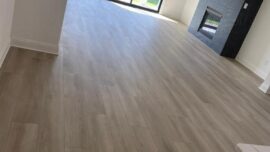
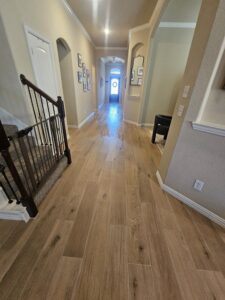
If you love the look of wood but need something water-friendly, both floors deliver. Wood-look porcelain is ideal when you want one continuous floor from the kitchen to the back patio, or a mudroom that can take anything. It comes in long planks with realistic grain, and with narrow, color-matched grout lines it reads as wood from across the room. Wood-look vinyl plank feels closer to real wood underfoot: warmer, a little softer, and with no grout to clean. If you’re choosing between the two for a whole-home project, many families put porcelain in the entry, kitchen and baths and LVP everywhere else.
On wood-look tile, a grout that matches the darkest tone in the plank hides lines and dirt. On stone-look tile, a slightly contrasting grout can show off the pattern. Ask to see a grout sample next to your tile before you decide.
What about cost?
Vinyl plank generally has the lower installed cost because it installs faster with less prep. Tile costs more mainly in labor: setting, cutting and grouting take time, and a stable, flat base is essential. Removing old flooring, leveling the slab and adding patterns like herringbone affect both. The most accurate number comes from measuring your space during a free estimate.
See tile and vinyl side by side at home
We bring porcelain, ceramic and vinyl samples to your door across Frisco, Plano, Prosper and North Texas. In-home estimates are free.
Book my free in-home estimateFrequently asked questions
Is tile or vinyl better for a bathroom?
Tile is the classic, longest-lasting choice and a must in showers. Vinyl plank is warmer, quieter and faster to install, and its waterproof core works well on bathroom floors.
Which lasts longer, tile or vinyl?
Tile typically lasts 50 years or more when installed well. Vinyl plank usually lasts 15 to 25 years depending on the wear layer and traffic.
Is vinyl plank cheaper than tile?
Usually, yes. Vinyl plank installs faster with less labor, so the installed cost is typically lower than tile.
Can vinyl plank go over tile?
Often, if the tile is flat and solid and the grout lines are minor. We check the existing floor during your estimate.
Which is better for pets, tile or vinyl?
Both handle accidents well. Tile resists scratches best; vinyl is softer and quieter for pets and their owners.