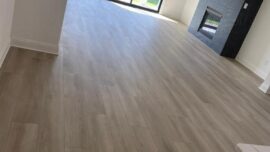
Hardwood vs Engineered vs Laminate Flooring: Which Is Right for Your Home?
Last Updated on October 16, 2026 by Valeria
Choosing a new floor is one of the most exciting parts of any home project. It’s also one of the most confusing, because three very different products can look almost identical in a showroom photo. Below we put solid hardwood, engineered hardwood and laminate side by side: what they’re made of, how they hold up to kids, pets and North Texas weather, and which one fits each room. Our crews install all three every week across Frisco, Plano and Prosper, so this is the same advice we give homeowners at their kitchen table during a free in-home estimate.
The 30-second floor finder
Not in the mood for a deep dive? Find the card that sounds most like your home.
Hardwood vs engineered vs laminate at a glance
| Solid hardwood | Engineered hardwood | Laminate | |
|---|---|---|---|
| What it is | One solid piece of wood, usually 3/4″ thick | Real hardwood top layer bonded to a plywood or HDF core | Printed wood image under a clear wear layer, on a high-density fiberboard core |
| Real wood? | Yes, all the way through | Yes, on top | No |
| Look and feel | ●●●●● | ●●●●● | ●●●○○ |
| Scratch resistance | ●●○○○ | ●●●○○ | ●●●●● |
| Water resistance | ●○○○○ | ●●○○○ | ●●●○○ (higher on waterproof lines) |
| Can be refinished? | Many times | Usually 1–3 times, depending on wear layer | No |
| Over a concrete slab? | Not usually | Yes | Yes |
| Typical lifespan | 50–100 years | 20–40+ years | 15–25 years |
| Installed cost | $$$ | $$–$$$ | $ |
| How it’s installed | Nailed to a wood subfloor | Glued down or floating; nailed over wood subfloors | Floating (click-together over underlayment) |
Hardwood vs laminate: what’s really different
The biggest difference is simple: hardwood is wood, and laminate is a photograph of wood protected by a tough clear layer. That one fact drives almost everything else.
Hardwood ages and renews. It picks up character over time, and when the finish wears down, a crew can sand it and refinish it, even in a brand-new stain color. It feels warm and solid underfoot and has the natural variation only real wood has.
Laminate stays the same, which can be a good thing. Its wear layer shrugs off scratches that would mark hardwood, and it installs quickly as a floating floor. The trade-off is that when it does wear out or get damaged, the boards are replaced rather than refinished. A quality underlayment matters, too: it’s what keeps laminate from sounding hollow.
Engineered wood vs laminate
These two are the most common head-to-head in North Texas, because both work well over a slab and both come in wide, modern planks. The question comes down to real wood vs maximum toughness.
Choose engineered hardwood if you love the warmth, natural grain and value of real wood, and you’d like the option to refresh the surface someday. Choose laminate if your home sees heavy daily wear, you want the most scratch-resistant surface for the money, or you’re flooring a large area on a tighter budget. Many families mix the two: engineered hardwood in the living and dining rooms, laminate or LVP upstairs or in the kids’ wing.
Curious how engineered planks are built? We break it down layer by layer in how engineered wood flooring is made.
Engineered hardwood vs vinyl plank (LVP)
Luxury vinyl plank is the fourth option most homeowners ask about. Its big advantage is water: quality LVP is waterproof, which makes it a favorite for kitchens, laundry rooms and bathrooms. Engineered hardwood wins on authenticity, warmth underfoot and long-term value. A popular plan is engineered hardwood through the main living areas, with LVP in the wet zones. Compare vinyl formats in our LVT vs LVP guide, or see our vinyl plank installation services.
Why North Texas homes change the math
Most homes in Frisco, Plano, Prosper and the rest of Collin and Denton counties are built on concrete slab foundations, and they sit on clay soil that shifts with the seasons. Add bone-dry heated air in winter and humid summers, and you get a lot of movement that floors have to handle.
That’s why engineered hardwood is the real-wood workhorse here. Its cross-layered core expands and contracts far less than solid boards, and it can be glued directly to the slab or floated above it. Solid hardwood is still a beautiful option on second floors and in homes with a wood subfloor. Whatever you choose, two steps protect the investment: letting the material acclimate in your home before install, and using the right moisture barrier over concrete.
The best choice, room by room
What about cost?
As a rule of thumb, laminate has the lowest installed cost, engineered hardwood sits in the middle to upper range, and solid hardwood is usually the highest. The plank you pick is only part of the price, though. Removing the old floor, leveling the slab, stairs, transitions and trim can move the total more than the material does. The most accurate number comes from measuring your actual rooms. Our in-home estimates are free, and we bring samples to you so you can see them in your own light.
Brands we install
For hardwood and engineered hardwood, our customers love Bella Cera, Jackson Hardwood and D&M Flooring. For laminate, Lux Flooring offers realistic visuals with water-resistant performance. Want to compare species too? Read the best wood species for hardwood floors, or explore our hardwood flooring installation and laminate flooring services.