Hardwood Flooring

GC FLooring Pros
About Floors, Blog, Hardwood Flooring

How To Choose The Right Hardwood Flooring Species

The quick answer

The most popular types of wood flooring are white oak, red oak, hickory, maple, walnut and Brazilian cherry. For most homes, oak is the best all-around choice: hard enough for daily life, easy to stain and fairly priced. Hickory is the toughest domestic option for kids and pets, and walnut is the softer, dressier pick for low-traffic rooms.

On the concrete slabs under most Frisco, Plano and Prosper homes, choose any of these species in engineered form for the best stability.

Choosing a wood species is one of the most fun parts of a new floor. It decides the color, the grain you’ll see every day, and how well the floor holds up to dogs, kids and dining chairs. With so many types of wood flooring and wooden floorboards out there, it helps to narrow the field to the species that actually work well in homes. Below we compare the six we get asked about most, with hardness, look, price and the rooms each one suits best.

This is the same advice our team gives homeowners during free in-home estimates across Frisco, Plano and Prosper, where we bring real samples so you can see each species in your own light.

Types of Wood Flooring Compared: Best Wood Species at a Glance

The Janka rating measures how hard a wood is: it’s the force needed to press a steel ball halfway into a sample that has been dried to about 12% moisture. Higher numbers resist dents better. Anything above roughly 1,200 holds up well in a busy home. For the technical background on wood testing, see the USDA Forest Products Laboratory.

SpeciesJanka hardnessLook & grainPrice tierBest for
White oak1,360Neutral tan to soft brown; tight, straight grain; takes modern stains beautifully$$Whole-home floors, light and natural looks, kitchens
Red oak1,290Warm with pink-red undertones; bold, open grain that hides wear$Traditional homes, budget-smart whole-home floors
Hickory1,820High color variation from cream to brown; strong, rustic grain$$Busy families, pets, rustic and farmhouse styles
Hard maple1,450Light, creamy and clean; subtle, fine grain$$Modern and Scandinavian looks, bright rooms
American walnut1,010Rich chocolate brown; smooth, flowing grain$$$Formal living and dining rooms, bedrooms, offices
Brazilian cherry2,350Deep red-orange that darkens with sunlight; interlocking grain$$$High-traffic areas where you want a bold, exotic look

Going deeper on a species? Compare the two most popular choices in our white oak vs red oak guide, or read more about hickory hardwood flooring, maple hardwood floors and black wood flooring.

The 30-Second Wood Species Finder

If you want the safest all-around pickWhite oak

Hard, stable, on-trend and easy to restain later.

If budget matters mostRed oak

The most affordable real hardwood, with grain that hides scuffs.

If you have big dogs and busy kidsHickory

The hardest domestic species, and its color variation hides wear.

If you love a light, modern lookMaple

Clean and bright. Choose a matte finish to keep it looking fresh.

If it’s a formal or low-traffic roomWalnut

Gorgeous dark color, but softer, so it suits quieter rooms.

If you want something boldBrazilian cherry

Very hard and very rich. Expect it to deepen in color over time.

How to Identify Wood Flooring by Grain

Trying to match an existing floor, or wondering what species you already have? Identifying wood by grain is the quickest place to start. Tighter, more uniform grain usually points to a denser, harder species, while open, bold grain tends to belong to softer woods that show their character.

Red oakBold, wavy, open grain

Pinkish-brown tones and a strong “cathedral” pattern. Pores look open up close.

White oakTighter, straighter grain

Tan to cool-gray tones, often with ray flecks on quarter-sawn boards.

MapleVery subtle, smooth grain

Creamy and clean, with the occasional birdseye or curly figure.

HickoryDramatic variation

Big swings in both grain and color, from cream to dark brown, even in one board.

Brazilian cherryComplex, interlocked grain

Rich red-brown color that deepens with sunlight.

BambooFibrous, linear grain

Straight “knuckle” lines. Technically a grass, not a wood.

If a board has been stained, look at the end of a plank (under a vent cover or at a threshold) where the grain and natural color are easier to see. Bring a loose piece to a free in-home estimate and we can help you match it.

Best Wood for Busy Family Homes

If your home sees backpacks, toy trucks and dinner guests, look for three things: a Janka rating above about 1,200, a grain or color variation that disguises small marks, and a lower-sheen finish. White oak and hickory check all three boxes. Red oak is a close third, and its open grain is very forgiving.

Finish and texture matter as much as species. A wire-brushed or lightly hand-scraped surface hides everyday scratches far better than a glossy one, and a matte finish doesn’t show dust and footprints. Glossy dark floors, on the other hand, show everything.

🛠️
Crew tip: the finish takes the hit first

Most everyday scratches are in the finish, not the wood. A floor with a tough factory finish can often be refreshed with a screen-and-recoat instead of a full sanding, so ask about finish quality as much as species.

Best Wood for Pets

For homes with dogs, hardness and texture are your best friends. Hickory and Brazilian cherry resist claw marks best, and white oak with a wire-brushed finish is a great middle ground. Softer species like walnut and lighter, glossy floors show scratches more. Our guide to the best wood flooring for dogs goes species by species, and also covers pet-friendly floors beyond hardwood.

Solid vs Engineered on North Texas Slab Foundations

Every species above comes in the two main types of wood floors by construction. Solid hardwood is one piece of wood, top to bottom, and is nailed down to a wood subfloor. Engineered hardwood has a real-wood top layer, in the same species and finishes, bonded to a stable cross-layered core.

Most homes in Frisco, Plano and Prosper sit on concrete slabs over clay soil, and North Texas swings from humid summers to dry heated winters. Engineered wood handles that movement better and can be glued down or floated directly over concrete, so it’s usually the best choice for slab homes. Solid hardwood is still a great option upstairs or anywhere with a wood subfloor, and it can be refinished more times over its life. Curious how the layers work? See how engineered wood flooring is made, or compare all three options in our hardwood vs engineered vs laminate guide.

Solid hardwoodEngineered hardwood
Over a concrete slabOnly with a plywood subfloorYes, glued or floated
Stability in humidity swingsGoodExcellent
RefinishingMany times1–3 times, depending on wear layer
Wide planks (7″+)More prone to cuppingStays flatter
Look once installedIdentical: both are real wood on top

Other Ways Wood Floors Differ

Species is only one of your wood flooring options. These details change the look of the same wood dramatically:

CutPlain, rift or quarter sawn

Plain sawn shows the classic “cathedral” grain. Rift and quarter sawn give a straighter, calmer grain and extra stability.

GradeSelect to rustic

Select grades are clean and uniform. Character and rustic grades show knots and color variation, and often cost less.

WidthStrip to wide plank

Narrow strips feel traditional. Wide planks (7″+) feel open and modern and are best in engineered form.

FinishPrefinished or site-finished

Prefinished installs faster with no sanding dust. Site-finished is sanded and stained in place for a custom color.

Exotic Hardwood Species and the Janka Scale

Hardwood species vary enormously in hardness. The softest wood ever tested, cuipo, scores just 22 lbf, while Australian buloke reaches about 5,060 lbf. Most homeowners don’t need the hardest species available: very hard exotics look stunning but can be tougher to install, sand and refinish. Mid-range domestic woods like oak, maple and hickory balance looks, durability and easy upkeep.

Brazilian cherry (jatoba)About 2,350 lbf

Bold red-brown color and interlocked grain that darkens with light exposure.

Santos mahoganyAbout 2,200 lbf

Smoother, more even grain in rich chocolate and reddish-brown tones.

BambooVaries widely

Not a hardwood at all. Well-made strand-woven bamboo is very hard; lower-quality bamboo dents more easily.

Our Most-Installed Species in Frisco, Plano and Prosper

The species we stock and install most are white oak, red oak, hickory and maple, and we can source walnut, Brazilian cherry and many others on request. White oak’s neutral tone pairs well with the lighter, natural looks many North Texas homeowners want right now, while hickory is a favorite in homes with big dogs and active kids.

For engineered and solid hardwood, our customers love Bella Cera, Jackson Hardwood and D&M Flooring. The easiest way to choose is to see samples side by side in your own rooms, since daylight in a west-facing living room can change a color more than you’d expect.

MythThe hardest wood is always the best choice.
FactVery hard exotics can be harder to install and refinish. For most homes, oak or hickory gives you plenty of durability at a better price.
MythEngineered wood isn’t real hardwood.
FactThe surface is real wood in the same species as solid. Only the core underneath is different.

Ready to pick your wood species?

See our solid and engineered hardwood options, or book a free in-home estimate and we’ll bring samples to your door in Frisco, Plano, Prosper and across North Texas.

Explore hardwood flooring

Frequently Asked Questions

What are the main types of wood flooring?

The main types are solid hardwood and engineered hardwood. Within each, the most popular species are white oak, red oak, hickory, maple, walnut and Brazilian cherry. Wood floors also differ by cut, grade, plank width and finish.

What is the best wood for wood floors?

Oak is the best all-around choice for most homes because it is durable, easy to stain and fairly priced. Hickory is better for heavy wear and pets, and walnut is best for low-traffic rooms where you want a rich, dark look.

What is the most durable type of wood flooring?

Among popular species, Brazilian cherry and hickory are the hardest, with Janka ratings around 2,350 and 1,820. Hickory is the most durable domestic species. A tough finish and textured surface also add a lot of everyday durability.

Is engineered wood flooring better than solid hardwood?

Neither is better everywhere. Engineered hardwood is more stable and can go directly over a concrete slab, which makes it the usual choice in North Texas homes. Solid hardwood can be refinished more times and works great over a wood subfloor.

Which wood flooring is most popular right now?

White oak is one of the most requested species today, thanks to its neutral tone and how well it takes light, natural stains. Red oak remains a popular, budget-friendly classic.

How can you identify wood flooring by its grain?

Look at the grain pattern and color. Red oak has bold, wavy, open grain with pinkish tones; white oak is tighter and straighter with tan or gray tones; maple is smooth and subtle; hickory shows dramatic color and grain variation; and Brazilian cherry has interlocked grain with a deep red-brown color.
tips on how to choose the prfect stain for your hardwood floor
About Floors, Blog, Floor Care, Hardwood Flooring, How-to, Recommended Blog, Tips & Tricks

How to choose the right stain for your hardwood floor

Hardwood Floor Stain Guide: Choose the Right Color, Finish & Sheen for Your Space

A beautifully finished Hardwood Floor can transform any room—from bright lofts to cozy family spaces. Species like white oak, red oak, hickory, and Brazilian walnut all bring their own grain, tone, and hardness to the party. But the species alone doesn’t decide the final look—the stain, finish, and sheen you choose are just as important. This guide explains how different woods take stain, why sample testing matters, and how to pick light, medium, or dark stains that actually work with your room (and lifestyle).

Whether you’re installing new planks or planning a refinish, the goal is the same: a Hardwood Floor that looks incredible today and ages gracefully tomorrow. Below, you’ll find practical tips plus trusted resources to help you make confident choices.

Why Not All Hardwood Floors Stain the Same

Every wood species has unique cell structure, density, and porosity. That means the same stain can look dramatically different on two species—or even two grades of the same species.

  • Dense, tight-grained woods (e.g., maple, many exotics) can resist stain penetration, sometimes leading to blotching or a lighter-than-expected color.
  • Open-pored woods (e.g., red oak, white oak) accept stain more readily, often producing deeper, more uniform color.
  • Grain pattern and cut (rift, quarter-sawn, plain-sawn) also affect how light and stain reflect across the floor.

Because of these variables, always test your stain on your actual boards before committing. At GC Flooring Pros, we apply in-room stain samples so you can preview the exact color under your lighting and next to your cabinetry, walls, and furnishings. For color families and product details, browse manufacturer charts like DuraSeal® wood stains (external).

How Finish Systems Influence Your Final Color

Beyond stain color, your finish system can subtly shift tone and impact durability and maintenance:

  • Oil-based polyurethane: Slight ambering that can warm the stain; excellent film strength and abrasion resistance.
  • Water-based polyurethane: Clearer tone that preserves a “true-to-wood” look; fast dry and low odor.
  • Hardwax oils / penetrating oils: Low-build, natural feel that highlights grain; spot-repairable but may need more frequent maintenance coats.

For deeper technical guidance on finishes, installation, and maintenance best practices, see the National Wood Flooring Association (NWFA) (external), the industry’s leading authority.

Choosing Your Sheen: Matte, Satin, Semi-Gloss, or Gloss

Sheen affects both aesthetics and practicality:

  • Matte: On-trend, modern, and great at hiding micro-scratches and dust.
  • Satin: Soft glow that suits most homes; balances elegance and forgiving maintenance.
  • Semi-Gloss: Brighter pop and perceived depth but shows wear sooner.
  • Gloss: High reflection; dramatic but least forgiving of scuffs and dust.

Most homeowners today choose matte or satin to reduce visible wear and keep cleaning simple.

Light vs. Medium vs. Dark: How to Align Stain with Your Room

Light Stain

Best for: Smaller or darker rooms, Scandinavian or coastal styles, homes with kids/pets where dust visibility matters.

Why it works: Light stains bounce light, making spaces feel airier and larger. They pair beautifully with dark furniture for a crisp, high-contrast look.

Watch-outs: Light tones reveal the wood’s natural character (mineral streaks, knots) more readily than very dark stains.

Medium Stain

Best for: Balanced, transitional designs where you want warmth without dramatic contrast.

Why it works: Medium browns harmonize with most cabinetry and trim, so it’s a smart choice if you’re still evolving your décor or plan to change wall colors later.

Dark Stain

Best for: Grounding bright rooms, creating luxury contrast with light walls, highlighting brass/black fixtures.

Why it works: Dark floors feel sophisticated and tend to mask natural wood variation.

Watch-outs: Shows dust, pet hair, and surface scratches more readily. If you have big dogs or heavy traffic, consider a satin/matte sheen and a robust finish to minimize visibility of wear.

Species Matters: Matching Stain to Your Hardwood Floor

Here’s how common species typically behave with stain (results vary—always test):

  • Red Oak: Takes stain evenly with pronounced grain; warmer undertones complement medium to dark browns beautifully.
  • White Oak: Versatile and on-trend; ideal for light, natural, or “weathered” looks; also stunning in rich mid-tones.
  • Maple: Dense and tight-grained; can blotch with dark stains—use pre-conditioners and consider lighter/neutral tones.
  • Hickory: High hardness and lively color variation; wide planks showcase character; stains well but variation remains a feature.
  • Exotics (e.g., Brazilian Walnut/Ipe): Very dense; often look best with minimal staining and clear finishes to celebrate natural depth.

Want help choosing the right species before you pick a stain? Explore options and photos on our Hardwood Flooring page and our Hardwood Flooring Supply page.

The Stain-Sampling Process (What We Do on Site)

  1. Consult & assess: We review your room light, furnishings, and style to shortlist target color families.
  2. Prep test area: Lightly abrade and clean a discrete zone to ensure accurate penetration.
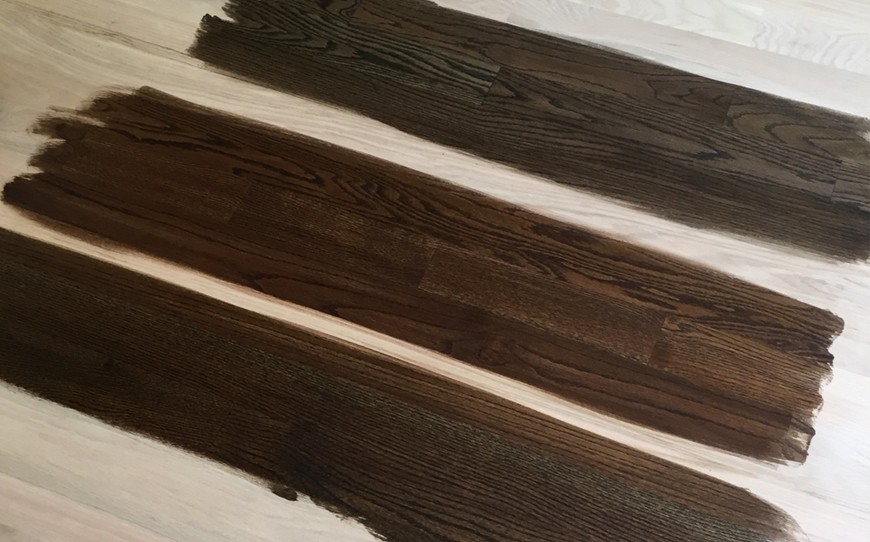
  3. Apply multiple swatches: Typically 3–6 options (e.g., Ebony, Provincial, Dark Walnut, Weathered Oak, Medium Brown).
  4. Evaluate in natural & artificial light: Colors shift from morning to evening; we want you to love it 24/7.
  5. Topcoat preview: We explain how oil- vs water-based finishes and chosen sheen will alter the final look.

Pro tip: View samples vertically (hold sample boards upright) as well as on the floor—your eyes perceive color differently across planes. And don’t forget to compare against cabinet doors and trim.

Durability, Maintenance & Lifestyle Fit

Great color is only half the story. To keep your Hardwood Floor looking its best:

  • Pick the right finish chemistry for your traffic level (busy homes benefit from tougher, higher-build systems).
  • Choose a forgiving sheen (matte/satin) to disguise micro-scratches and daily dust.
  • Use felt pads & entry mats to reduce abrasion; trim pet nails regularly.
  • Clean with manufacturer-approved products—avoid steam mops and harsh chemicals that can dull the finish.

Need deeper technical standards? The NWFA publishes best practices on maintenance, site conditions, and finish systems.

Frequently Asked Questions About Hardwood Floor Stains

Q: Can I change from dark to light (or vice versa) later?
A: Yes—one of the biggest advantages of a Hardwood Floor is that you can sand and refinish to a new color. Solid hardwoods can often be refinished up to five times; many engineered floors can be refinished at least once if the wear layer is 2mm+.

Q: Which stain hides dust best?
A: Mid-tone browns with a satin or matte sheen are the most forgiving.

Q: How long does the process take?
A: Typical sand-stain-finish projects take 2–4 days depending on square footage, number of coats, and product cure times.

Ready to See Your Color Options on Your Actual Hardwood Floor?

If you’re unsure between light, medium, or dark—or you want to compare oil- vs water-based finishes—we’ll bring curated stains to your home and apply real samples on your wood so you can choose with confidence.

Book your on-site stain sampling and get expert guidance from GC Flooring Pros—schedule your Free In-Home Estimate now.

is it worth the money to install hardwood flooring
About Floors, Blog, Hardwood Flooring

Is installing hardwood flooring worth the money?

Hardwood Flooring: Cost, Durability & How Long It Really Lasts

Hardwood flooring remains one of the most desired flooring options for homeowners who want beauty, warmth, and timeless elegance. Whether you choose solid hardwood or engineered hardwood, both options can elevate your home with natural character that other flooring materials simply can’t replicate. Beyond aesthetics, hardwood is also known for its impressive longevity—especially when properly maintained and refinished.

But how durable is hardwood flooring really? How much does it cost? And how many times can you refinish it? This comprehensive guide explains everything you need to know so you can confidently decide whether hardwood is the right investment for your home.

Why Hardwood Flooring Is So Popular

Homeowners choose hardwood flooring because it offers:

  • Long-term durability that can last for generations
  • Warm, natural beauty with unique grain patterns
  • Refinishing capability to renew its appearance multiple times
  • Versatile styling that matches any interior trend
  • High resale value that attracts future buyers

Unlike vinyl or laminate—which eventually require full replacement—hardwood flooring can be restored many times, adding to its long-term value. If you want to explore options, you can view different styles, stains, and species on our Hardwood Flooring page.

How Much Does New Hardwood Flooring Cost?

Pricing varies depending on species, grade, installation complexity, and whether you choose prefinished or unfinished boards. Here are the most important cost factors:

1. Hardwood Grade

Wood grade heavily influences cost:

  • High/clear grade: Long planks, few imperfections, uniform color
  • Select/standard grade: Balanced appearance and cost
  • Rustic/character grade: Most affordable; knots and natural variation

Premium boards tend to be longer and smoother, while rustic planks show more natural markings.

2. Wood Species

Some species cost more because of rarity or import costs. Domestic species such as Oak and Maple are more budget-friendly, while rarer woods like Kempas or Jatoba cost more.

If you want to compare hardness, durability, and species performance, the USDA Forest Products Laboratory is a leading resource on wood science and Janka hardness ratings.

3. Typical Price Range

On average:

  • Standard hardwood: $4–$8 per sq ft
  • Prefinished hardwood: About $2 more per sq ft
  • Exotic species: Higher and variable costs

Additional expenses may include:

  • Subfloor preparation or moisture testing
  • Glue, nails, or floating underlayment systems
  • Delivery fees and furniture moving
  • Labor increases for small rooms or intricate layouts

How Durable Is Hardwood Flooring?

Both solid and engineered hardwood offer excellent durability. Solid hardwood is one solid piece of lumber, while engineered hardwood has multiple layers beneath a real wood veneer. The wear resistance on the surface, however, depends primarily on wood species.

Janka Hardness Ratings

This test measures how well a wood species withstands pressure and denting. Popular hardwood species include:

  • Hickory: 1820 lbf
  • Maple: ~1400 lbf
  • White Oak: 1360 lbf
  • Red Oak: 1290 lbf

Higher Janka numbers indicate harder, more durable flooring. That said, even mid-range species perform extremely well in typical residential settings.

Other Durability Factors

  • Finish type: Water-based, oil-based, aluminum oxide, UV-cured
  • Traffic level: High-traffic areas wear faster
  • Moisture exposure: Humidity fluctuations may cause cupping
  • Pets: Larger dogs may cause surface scratches

Engineered hardwood handles moisture fluctuations better due to its layered composition, making it ideal for basements, kitchens, and humid climates when properly installed.

How Much Does Refinishing Cost?

Refinishing is one of the greatest advantages of hardwood flooring. Instead of replacing the entire floor, refinishing involves sanding down the surface, repairing imperfections, applying stain, and sealing with a protective finish.

Average refinishing costs:

  • $1.50–$5.00 per sq ft for common species
  • 4–5 hours to refinish a 100 sq ft room

Exotic hardwoods cost more to refinish because:

  • They may burnish under sanding due to high density
  • They create fine dust needing special filtration
  • They require careful, slow sanding to avoid damage

How Many Times Can You Refinish Hardwood Flooring?

The number of refinishes depends on the thickness of the wear layer and the precision of the sanding process.

Solid Hardwood

Most solid hardwood floors can be refinished up to 5 times—often lasting 50–100 years with proper maintenance.

Engineered Hardwood

Engineered hardwood can be refinished if its wear layer is at least 2mm thick. Higher-end engineered floors with 3–6mm veneers may be refinished multiple times.

The skill of the flooring professional also matters. Precise sanding preserves more wood, extending the life of your floor.

Is Hardwood Flooring Worth It?

For many homeowners, hardwood flooring is one of the most valuable long-term investments. It brings unmatched natural beauty, elevates home value, and offers decades of durability. Unlike other materials that wear out or go out of style, hardwood continues to age gracefully, gaining character over time.

If timeless design, longevity, and the ability to refinish your flooring matter to you, hardwood remains one of the best flooring choices available.

Your Perfect Hardwood Flooring Starts Here

Ready to upgrade your home with new hardwood flooring? Our team is here to help you compare species, finishes, installation methods, and refinishing options to ensure you choose the perfect fit.

Explore expert guidance and hardwood flooring options at GC Flooring Pros—and schedule your Free In-Home Estimate today.